
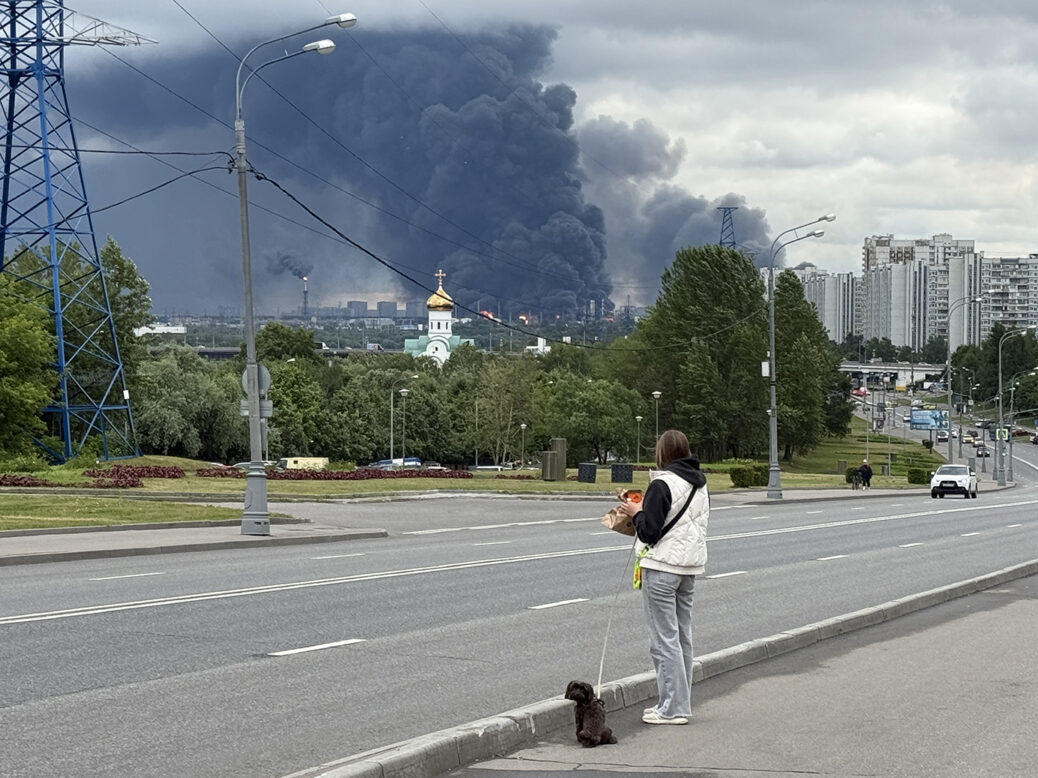
Russia’s oil refineries, the cardiovascular system of its domestic economy, are burning from Moscow to Siberia. Ukrainian drones – cheap, dispersed and precise – have turned Russia’s enormous size, which secured so many past victories, into a strategic liability. Long lines stretch at the gas stations and the black market petrol price in provinces now runs two or three times the official rate. Over the past few days, three logistical centres that supply Moscow’s residents with consumer goods and its military factories with Chinese components were set on fire. The purpose of Putin’s “special military operation” – a PR tactic designed to keep the war’s front concealed from its rear – has failed completely. Putin’s biggest bet – his mysterious friendship with the US President – has started cracking: at the Nato summit in Ankara last week, Trump praised Zelensky and seemed impatient with Russia. Nuclear threats are failing, too: Beijing has instructed Moscow in “an ultimatum-like form that there can be no thought whatsoever of using nuclear weapons”, European leaders told Zelensky in Ankara. Four and a half years into a war Russia expected to win in days, Ukraine’s military victory still lies ahead, but Russia’s defeat is already decided.
War – any war – is mass murder, political failure, and moral catastrophe. The Nuremberg tribunal called military aggression “the supreme international crime” that contained all the evil it subsequently caused. For the sake of current and future generations, everyone – in schoolrooms, at the ballot box, and in the corridors of power – should know that starting a war leads to punishment. War is also a fast and reliable judge of which societies actually work and which do not. Peacetime can hide institutional rot for a generation; war exposes it in months, and it punishes those responsible – not only the leaders, but the institutions. These are two forms of responsibility for war, and they complement each other: the personal responsibility of leaders, and the institutional responsibility of the state. War decides both on the battlefield prior to the debate in the courtroom or the conference room.
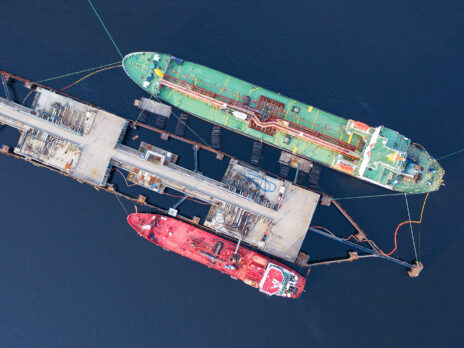
In 2022, Putin’s troops failed to capture Kyiv with the efficiency they displayed in Crimea in 2014. With the bloody collapse of that long-planned, well-supplied operation, the Kremlin retreated into ill-conceived improvisation. The model was the Second World War, with its swift manoeuvres, tank battles and aerial bombardment, but the Russian Federation, as Putin had shaped it over two decades, was not up to the task. The long frontline in Donbas stalled in trenches more primitive than those of the Western Front. The loss of the Black Sea Fleet re-enacted Russia’s humiliation in its war against Japan in 1905. The EU has imposed 20 sanctions packages and is drafting 21st. These sanctions have not stopped the Russian oil trade, which redirected to China and India, but the damage to the foundations of the Russian economy has still been serious. Far more decisive, though, has been Ukraine’s own campaign against Russian oil infrastructure – refineries, pumping stations, tankers, port terminals – which former defence minister Andriy Zagorodnyuk has called “strategic neutralisation”. Ukraine’s drones have struck Russian refineries some 200 times this year; every major refinery in European Russia has been hit, and the fuel crisis has reached Siberia. In a 12-day campaign this July, Kyiv claims to have struck more than 150 Russian tankers in the Black Sea and the Sea of Azov. The precision of Ukrainian strikes contrasts with the weakness of European sanctions; but most remarkable is the helplessness of Russian air defence and the navy. The reason is simple: Ukraine’s improvised arms industry has outrun and outgunned Russia’s sclerotic, Soviet-rooted one.
Sanctioned tankers still carry two-thirds of Russia’s seaborne crude, and all of their paths are now within reach of either Ukrainian drones, which target tankers and terminals, or Western enforcement, which controls insurance markets. Half of the total departs through the Baltic, which is almost surrounded by Nato, and most of the rest flows either through the Black Sea, where Ukrainian strikes have repeatedly shut the terminals, or increasingly through Arctic and Pacific ports. Only the Eastern Siberia–Pacific Ocean pipeline to China lies beyond anyone’s reach, but that is capped below a million barrels a day. And oil that rises in eastern Siberia and burns in northern China only needs to pass through Moscow in the sense that a road needs a tollbooth: the Kremlin adds nothing to this trade, and is visibly losing its monopoly on force. Further, this secure oil route runs across Russia’s least secure land; it crosses the Amur lands that the Chinese Empire ceded to the Russian Empire in 1858 and 1860. All that keeps Russia’s east together is China’s proclaimed aversion to secession, which uneasily competes with its appetite for the lost lands. Hong Kong has been recovered, Taiwan could be next in line, and Outer Manchuria is remembered on Chinese maps that call Vladivostok “Haishenwai”.

History is an education, and war and peace are its hardest subjects. The Russo-Ukrainian War started with a classical dichotomy of natural resources versus creative labour, with Russia banking on the former and Ukraine forced into the latter. The lesson is clear: security depends on the creativity, innovation and motivation of a citizenry, not on resources extracted from the ground. As liberal philosophers discovered long ago, human industriousness is a product of an entire social system – its rights, liberties, institutions and incentives. During peacetime, it takes centuries to build such systems through universities, patent law, and merit-based promotions. War accelerates this construction and throws it into sharp relief. It strips out Russia’s fossilised institutions on the battlefield. It installs young, unprejudiced Ukrainian technocrats in positions of power that peace would never have offered them, and that they would not otherwise have sought. The conflict between Mykhailo Fedorov, the 35-year-old politician who built Ukraine’s drone war and became its youngest defence minister – and the country’s top general, Oleksandr Syrskyi, embodies the problems of combining innovation and control.
In July, Zelensky resolved it the old way, dismissing the innovator and keeping the commander; whether Ukraine’s advantage survives its own vertical of power is now the fateful question, for war has a magical, unrivalled capacity to accelerate both progress and decay.
It was Immanuel Kant, who lived through the Russian occupation of East Prussia, who first understood the relation between civil liberty and military success: “The danger of war is also still today the sole thing that moderates despotism, because wealth is required for a state to be a might, but without freedom, no enterprise that could produce wealth will take place”. This is why the West outlasted the Soviet Union in the Cold War, and why Ukraine is building up momentum against Russia. It may also be the political wisdom behind China’s decision to prohibit Russia, its ally and vassal, from using nuclear arms against Ukraine.
In its process, war re-enacts old historical traumas. Ukrainians keep returning to the memory of the Holodomor – a famine only Stalin could inflict on this fertile land, and one Putin has so far failed to reproduce. Russians, meanwhile, are reliving the Soviet fear of shortage – a threat to physical survival and a wellspring of corruption. It is not food but fuel that is scarce now, though without fuel there will eventually be no food either. Watching new gigantic refineries lose capacity one by one, Putin has approved a network of micro-refineries. The government has lowered fuel standards, permitting a petrol that slowly destroys the engines of modern cars and is too dirty to be sold even in Belarus. Oil refineries, like metal factories, logistical storehouses and data centres, obey economies of scale – and scale is precisely what drones punish. Here is another lesson of this war: the modern economy demands an unprecedented concentration of production, while the new regime of security demands dispersion. The contradiction cannot be resolved, only suspended – and its suspension is called peace.
As the American sociologist Charles Tilly famously observed, war makes the state and the state makes war. A major war is the acid test of a state’s ability to govern itself, manage its neighbours, and survive. At peace, failed states can persist for decades in stagnation and misery; if they choose war instead, their breakup is the more probable endgame. History offers examples of states that started unjust wars and did not survive them. In the 20th century it was Austro-Hungary, Nazi Germany, Yugoslavia, and the Soviet Union after its invasion of Afghanistan. Each had the option of peaceful decline but chose war, and was broken apart by it. Their defeats meant not only personal punishment for their leaders, but the breakup of whole countries. A disintegration of the Russian Federation, predicted by some analysts (including the current author) from the war’s earliest weeks, is now taken seriously in Kyiv and in parts of Europe as one of the war’s most probable outcomes. Like any such event, this would create both new dangers and new opportunities.
In terms of grand strategy, a Russian breakup would have certain advantages – relief of security anxieties across eastern Europe, decentralisation of power on the continent, and the formal acknowledgment of a Chinese economic dominance over the Russian far east that has, in practice, been underway for years. Formalising that dependency would likely be more stable than leaving it ambiguous, since undeclared spheres of influence tend to invite exactly the kind of great-power miscalculation the region has already started to see.
But a Russian breakup is also a nightmare of non-proliferation planning: contested control over nuclear weapons, armed successor states, and new capitals whose loyalties are unknown. Managing it would demand the most careful international effort since 1991, precisely because getting it wrong would be catastrophic for Europe and the world. The relatively bloodless unwinding of Soviet power in 1991, including the disarmament of much of its nuclear arsenal, was once held up as proof of what the international community could achieve. But it was the issues left unresolved in 1991 – not least the unenforceable security assurances Ukraine was given in exchange for surrendering its own nuclear weapons – that led to the invasions of 2014 and 2022.
Predictions are doomed to fail, but the facts on the ground are clear: Moscow has been an irresponsible and unpredictable power, and its control over an enormous space of Northern Eurasia has produced one of the most barbaric, bloody and unjust wars of modern history. A new configuration of powers, including nuclear ones, could produce a more secure arrangement than the current one for many reasons. It could fail, too. One truth is indisputable: the current arrangement is not secure.
It has taken four and a half years and more than a million murdered people to shift the course of this war – an immense cost in lives, time and money sacrificed to an ugly, absurd, Putin-faced god of war. Ukraine’s military victory has not yet arrived, but the pendulum has shifted in its favour. When the smoke settles and the dead are buried, the geopolitical map of Europe, and of Eurasia as a whole, will change forever. It will take a major international effort to acknowledge the new balance of power, rebuild security arrangements, and recognise new independent states. As has always happened after great wars, major international conferences will take place, and new global institutions will be built. Not easily, not immediately, and not without conflicts of interest among them, but Ukraine, Europe, China and the United States will have to build it together – or suffer the alternative.
[Further reading: Andy Burnham must not bow to Trump]
Content from our partners


Related
Join the debate
Subscribe here to commentThis is serious stuff. Europe is currently preparing itself for Russian intrusion of some kind, probably in the Baltic States that form the NATO front line. This article suggests that Russia will not survive the Ukrainian invasion. If China has forbidden Russia from threatening to use nuclear weapons then it is only a matter of time before Russia runs out of manpower to hold 1000 kilometres of front line. A dilemma arises. If the Russian Federation collapses all hell will break lose and China is best placed to recover the lands lost to Russia in the 19th century. I hope the European governments take your prognosis into their intelligence options. It might save a lot of wasted expenditure.
The end of Putinism ? Very probably.
But the end of Russia ? Unlikely – perhaps just wishful thinking by a Russian exile who grovels to phantasms like the EU and Europe.
After all, it’s Europe, not Russia. that will soon be part of the Ummah.
So, the Russians surrender and collapse. And, all we need to worry about is “Ukraine, Europe, China and the United States” getting along. Funny, how the author leaves out Russia. Ukraine was the most corrupt country of Europe before the US overthrew their elected President and the Biden’s millions from Burisma Gas, and with the most recent three years of martial law, and with nearly a half a trillion of armaments and funds from the West (even Musk throwing in satellite targeting), it’s not much better. And, hundreds of billions more shouldered on Western Europe from the Pyrrhic victory of destroying 180 billion cubic meters of gas imports a year from Russia, largely replaced by US LNG at triple the price. And, Russia replaced its exports to China, India and other.
The author has no evidence that Russia’s target was Kyiv. In fact, all evidence from the US overthrow of the Ukraine President onward is that NATO expanded to Russia’s doorstep and further and killed early negotiations to end the war. The anathema Thump and unpopular leaders of Europe with their sub 30% public approvals need a victory, any victory. It will take a lot more than drones and propaganda to destroy Russia. The West cannot even deal with the ugly heads of the Ukraine fascists that keep rising in the public and military like a game of Whack-A-Mole.
I would encourage the author to compare and contrast the recent history of Ukraine and Iran for policy issues of proxy terrorist states thriving in the 21st Century.